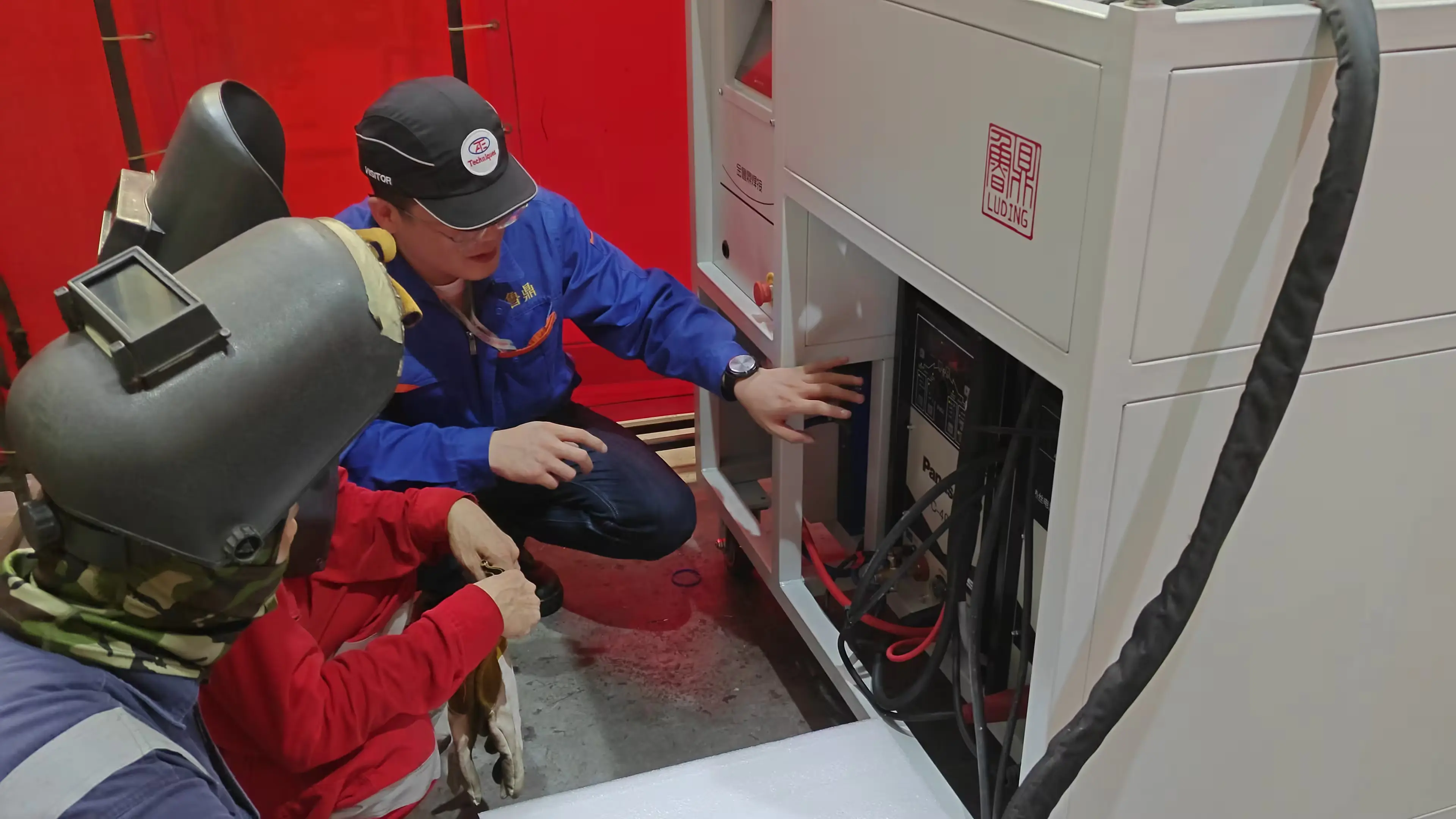
Support after sale is as important as the product quality!
Introduction
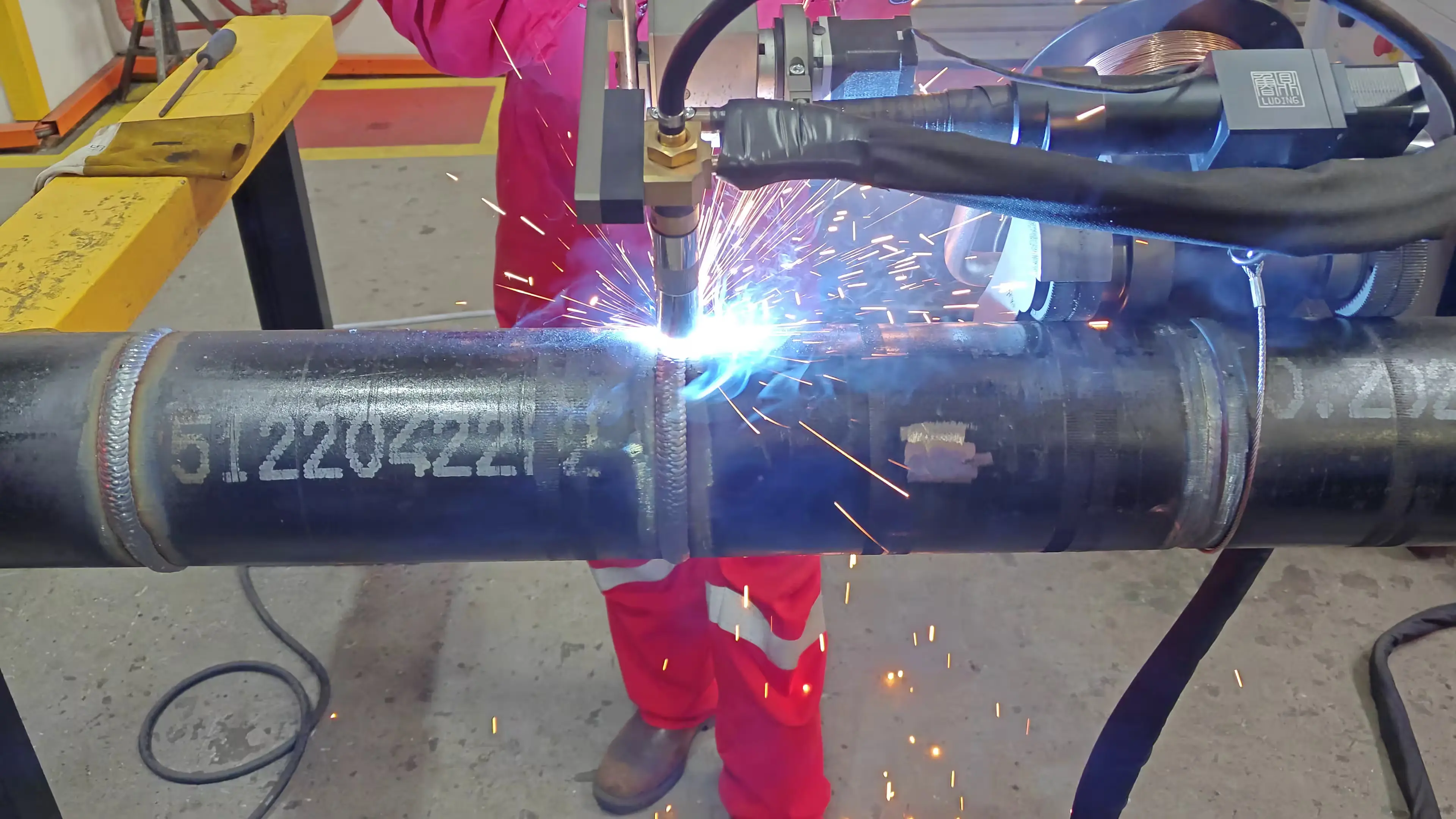
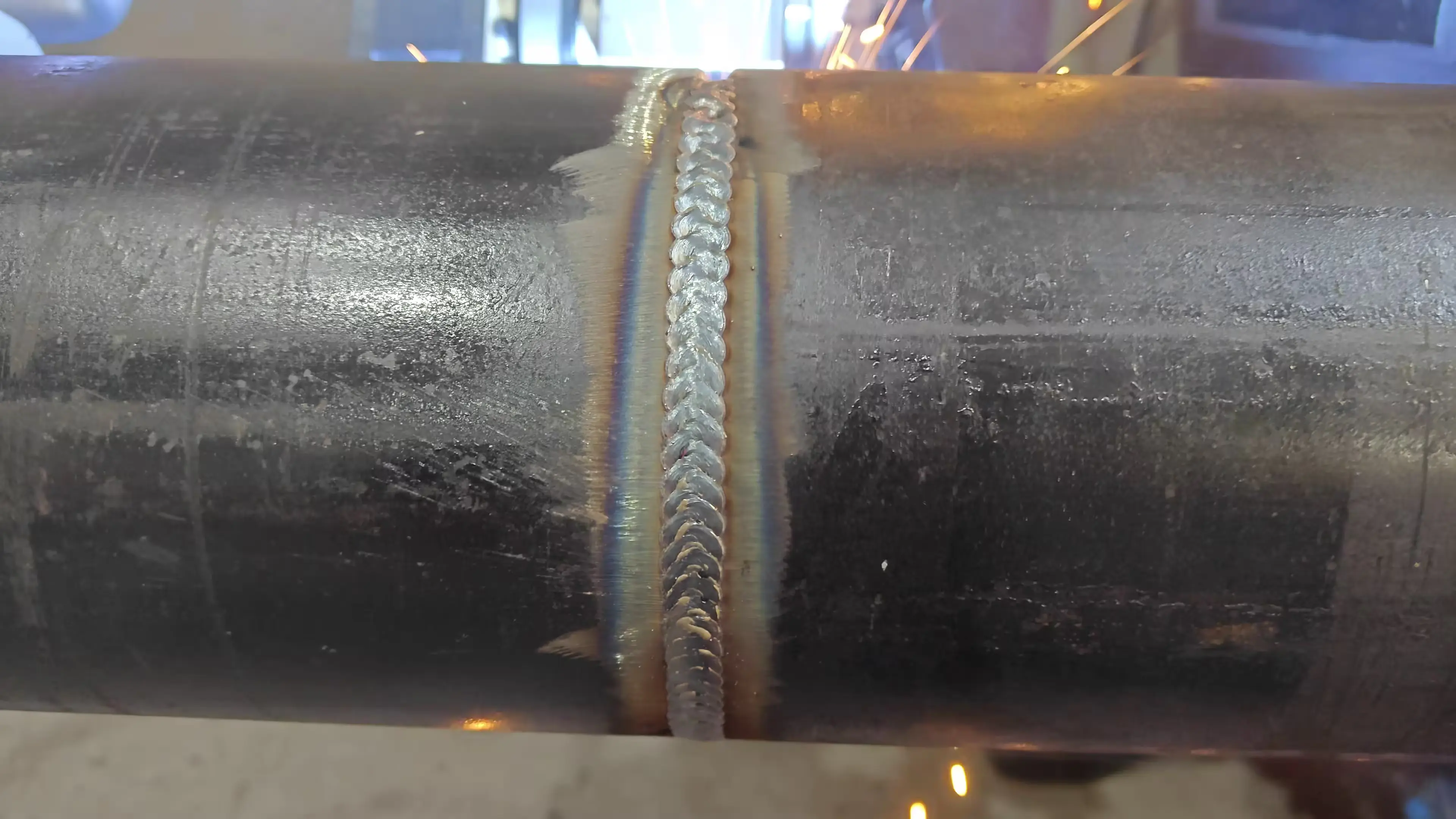
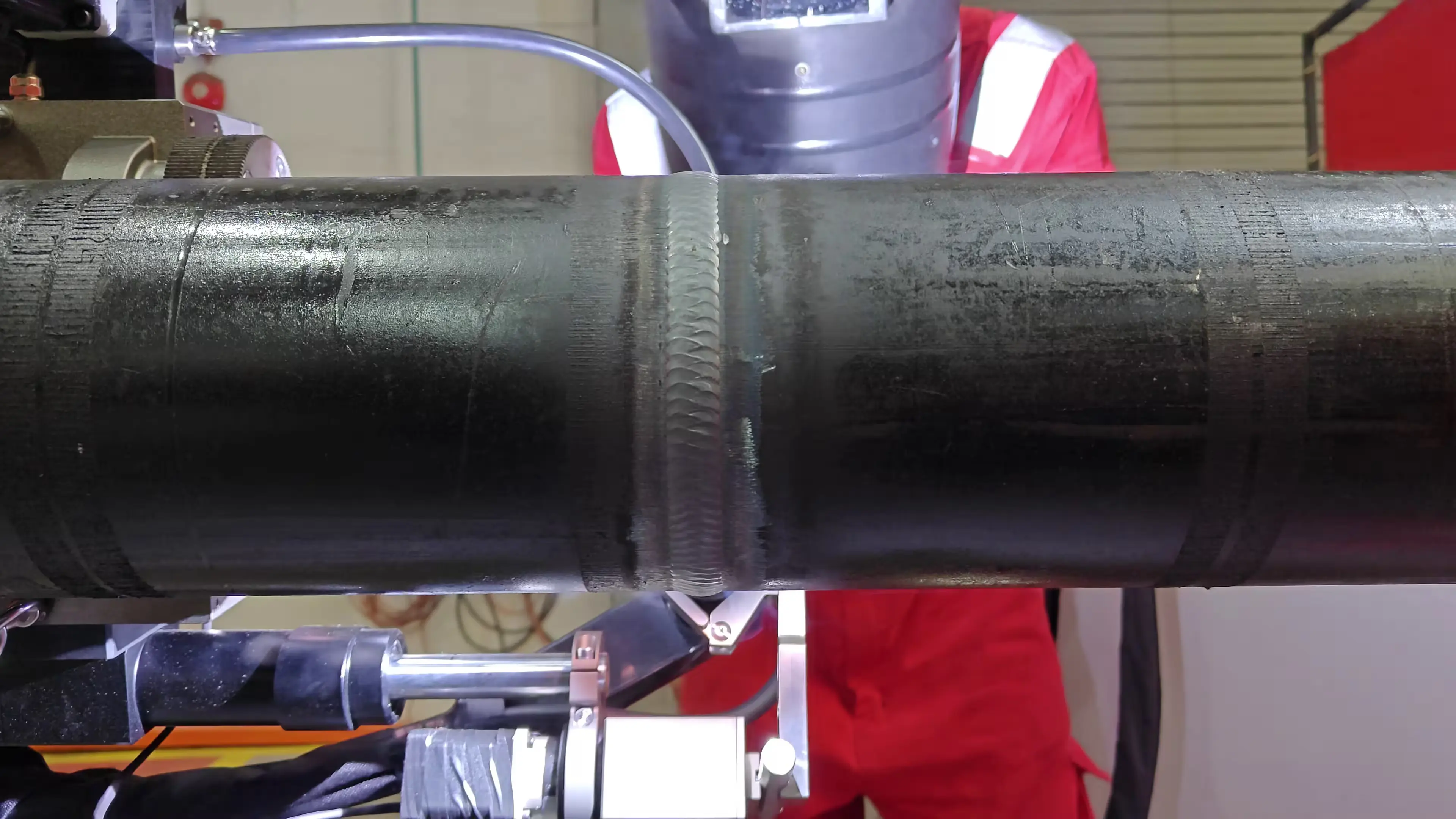
Our field engineering team has just completed an overseas dispatch training in Singapore with the pipe welding crew of an HVAC (ACMV) contractor, covering the APF160-MIG and APF160-RST (APF-T) all-position pipe welding systems it bought from us. The customer's radiographic testing of randomly chosen welds found only two with any porosity, a tiny pore or two each, and the customer gave the equipment a high grade.
Visits like this are where orbital welding training does its real work. An automatic machine holds travel speed, torch angle and arc length steadier than any hand, but only within the setup a person gives it.
This post covers why training belongs in the customer's production environment, who needs it, what the radiographs showed, and why a sale of automatic welding equipment starts a long-term support relationship rather than closing a one-time deal.
Why Training Belongs in the Customer's Production Environment
A factory demonstration proves the machine works. It doesn't prove the customer's crew can make it work on their own pipe, fit-up and site.
Building-services pipework is a demanding classroom: large-bore pipe on active construction sites, often at height, in tight gaps between columns and neighboring services. The skills that matter are practical: mounting the magnetic carriage so it tracks true, knowing when a joint needs an orbit track, and setting oscillation and arc-voltage control for the actual joint.
Automation doesn't remove skill from welding; it moves it. On a manual joint, quality lives in the welder's hands. On an orbital system, it lives in the setup and the stored procedure, and a wrong setup repeats the same defect all the way around the joint.
There's a legal side, too: Section 12 of Singapore's Workplace Safety and Health Act 2006 lists "adequate instruction, information, training and supervision" among employers' duties, and training from the manufacturer on the actual machine helps meet it.
See how the APF160-MIG's magnetic carriage clamps straight onto the pipe
Who Needs Welding Training after automation, and What Each Role Owns
Training that only reaches the operator leaves gaps, and the welding standards agree. ISO 14732:2025 sets qualification requirements for two distinct roles in mechanized and automatic welding: the welding operator and the weld setter. ASME Section IX likewise qualifies welding operators separately from welders. ISO 14731:2019 adds welding coordination personnel, who must be competent in the welding tasks allocated to them.
On site, that means four groups:
- Welding operators mount the carriage, recall a procedure, run the cycle and step in manually when a joint demands it.
- Weld setters or lead technicians build and tune procedures: segment parameters, oscillation width, speed and dwell, and arc-voltage tracking.
- Welding coordinators and QA/QC staff tie each stored procedure to a qualified welding procedure specification and decide what gets inspected.
- Maintenance technicians look after torch consumables, wire feeding, the TIG system's water cooling and the carriage.
Our engineer's job is to reach all four: transfer know-how, calibrate parameters to the customer's pipe and filler metal, and leave a crew that can work without us beside them.
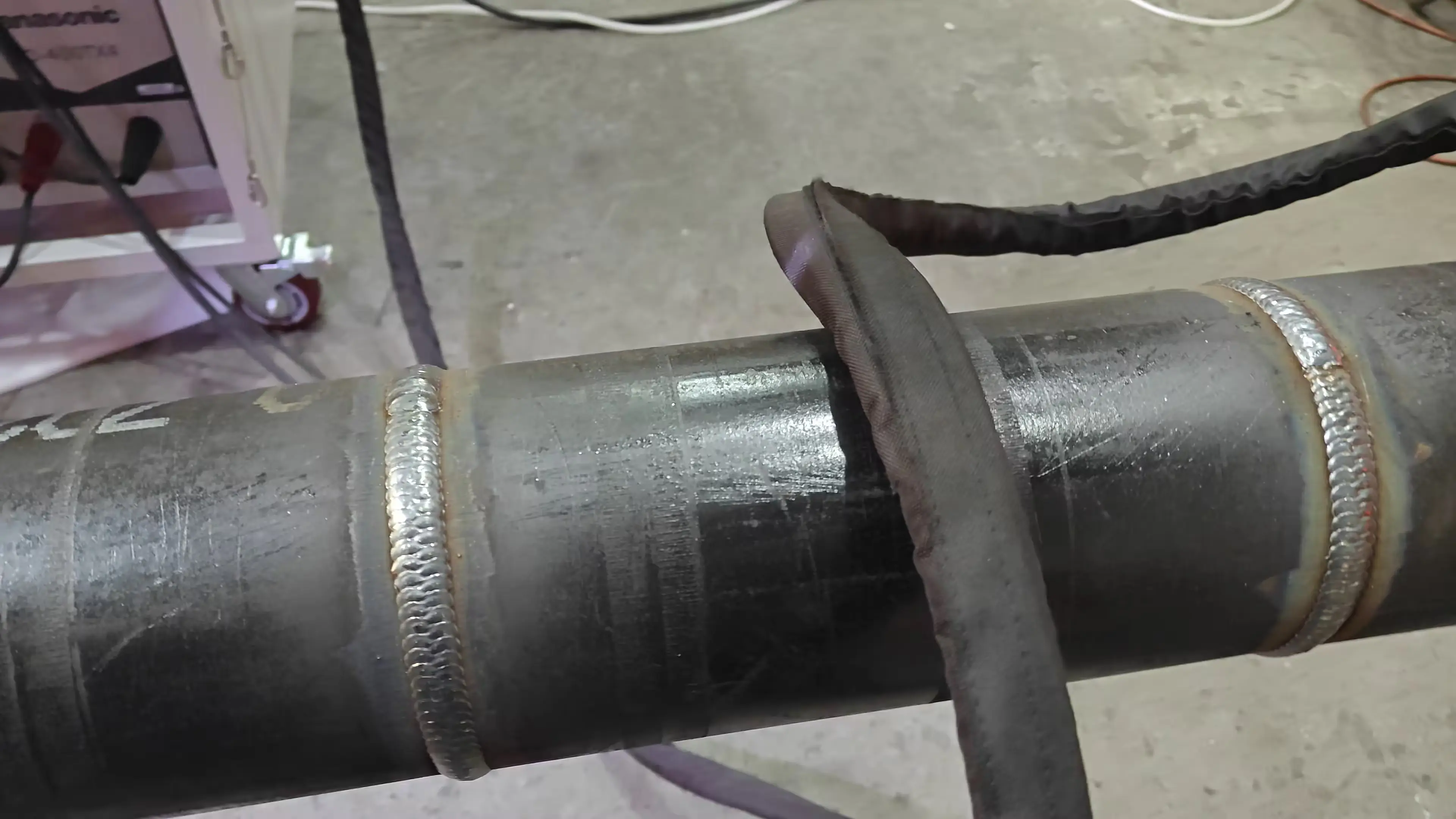
What the Customer's Radiographic Testing Showed
Radiographic testing (RT) shows what visual inspection can't: porosity, slag and lack of fusion inside a weld. The customer picked the welds itself, at random, so the sample reflects routine production rather than a showcase joint.
The two welds with porosity had one or two very fine pores each, with no effect on weld quality. Isolated fine pores aren't an automatic reject: ISO 5817:2023, which covers automatic as well as manual welding, limits the size and amount of porosity at each quality level rather than demanding a void-free weld.
Few indications across a random sample point to consistency, and consistency is what correct setup and training are there to deliver.
Why a Welding Equipment Sale Is a Long-Term Relationship
Good radiographs don't end the job. A pipe welding system is paid for once and used for years, and three things change over that time.
People change, and skills fade. Crews rotate between projects, and new operators need onboarding. Even trained staff lose ground: a meta-analysis of skill-retention research (Arthur et al., 1998) found substantial skill loss after long periods of non-use, with cognitive, accuracy-based tasks decaying faster than physical ones. Programming segments and tuning arc-voltage control is that kind of skill; a setter who builds a new procedure only a few times a year will lose it without refreshers.
Projects change. A new pipe size, a new welding procedure specification or a move to stainless steel each calls for parameter development, and non-magnetic pipe also needs an optional special track for the carriage.
Machines wear. Contact tips, nozzles, tungsten and liners are consumables, and moving parts wear. On a construction program, a stopped machine can idle a crew, so fast answers and spare parts matter as much as the original spec.
That's why our after-sales support is built as lifetime support: end-to-end engineering training at purchase, then on-site maintenance and precision tuning, backed by 24/7 service, spare parts availability, and troubleshooting and diagnostic assistance. This dispatch is one visit in that relationship, not the end of it.
Product Spotlight: APF160-MIG and APF160-RST in Trained Hands
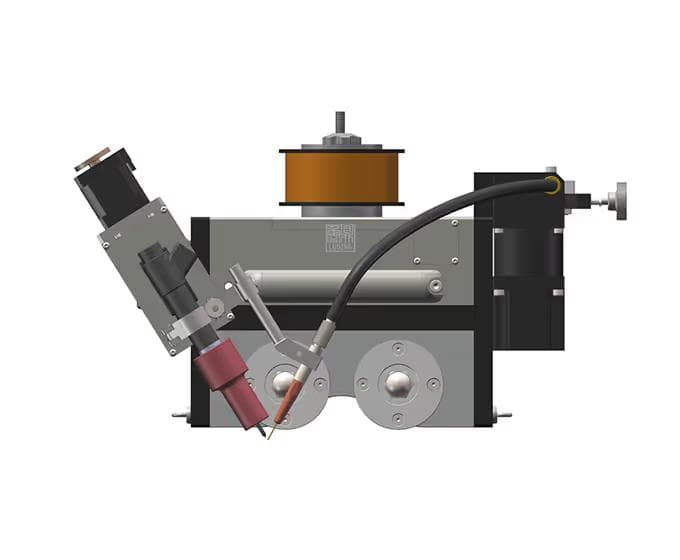
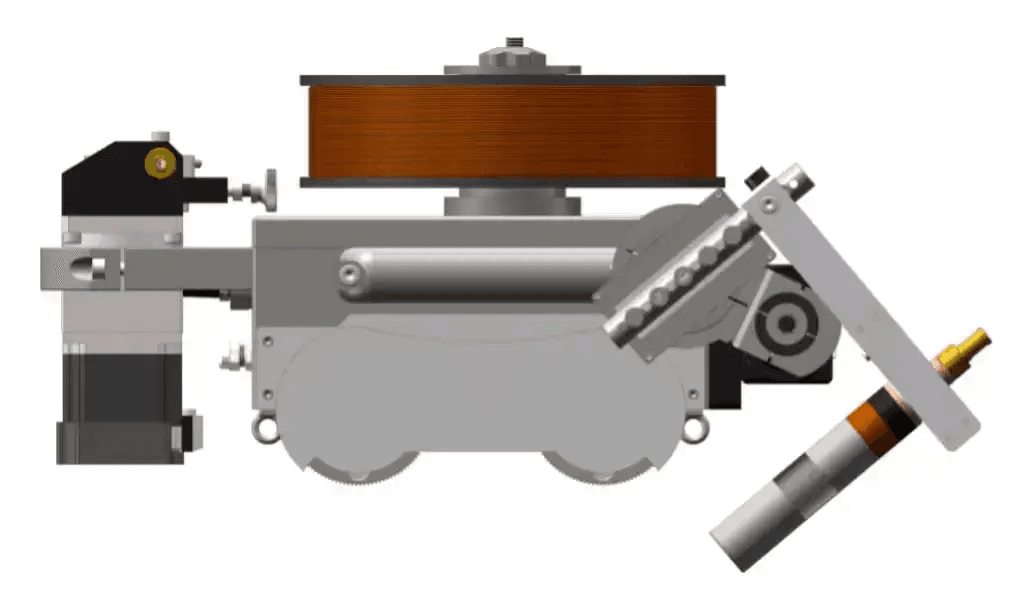
Both systems use a magnetic-wheel carriage that clamps onto the pipe and drives the torch around a pipe-to-pipe circumferential butt joint, so the pipe never needs rotating. They handle pipe from 159 mm OD, or down to 89 mm with an orbit track, with a minimum pipe length of 500 mm. Training pays back in these features:
- Stored procedures. Each system's color touchscreen stores 30 welding procedures. A trained setter builds and proves a procedure once; operators recall it for every joint that follows.
- Oscillation and arc-voltage control. Oscillation adjusts from 0–40 mm wide at 0–20 mm/s with 0–5 s dwell, and arc-voltage tracking follows the pipe with ±0.2 mm accuracy over a 0–40 mm range. These settings shape sidewall fusion and bead profile, the core of setter training.
- APF160-MIG: 8-section parameter programming for fine-tuning penetration depth and wire feed, a wireless remote for real-time adjustment, and an NBC350 power supply with an LD315 air-cooled torch.
- APF160-RST (APF-T): TIG welding on a Panasonic YC-400TX power supply (Panasonic hot-wire supply optional), an LD22 water-cooled torch with an 18 L forced-circulation cooler, and wire retraction and impulse feeding for consistent filler delivery.
Both run a one-button automatic cycle with manual override, which is where an operator's trained judgment still counts.
Request a free technical assessment for the APF160-MIG all-position MIG welder or the APF160-RST hot-wire TIG welder.
FAQ
Can less experienced welders run an orbital welding system?
For daily running, yes. Stored procedures and one-button cycles are designed for it, and the APF160-MIG is built to be simple to operate even for less experienced staff. Developing and approving procedures still needs a trained setter and a welding coordinator.
Does the carriage work on stainless steel pipe?
The standard wheels are magnetic, so carbon and alloy steel pipe is the default. For stainless steel and other non-magnetic materials, both systems take optional special tracks.
Conclusion
An orbital system is only as consistent as the setup and procedure behind it. That's why orbital welding training has to happen in the customer's production environment and reach operators, setters, coordinators and maintenance staff alike, and why support continues long after delivery. The customer's RT results from this latest dispatch show that model at work.
Talk to our engineers about the APF160-MIG and on-site training