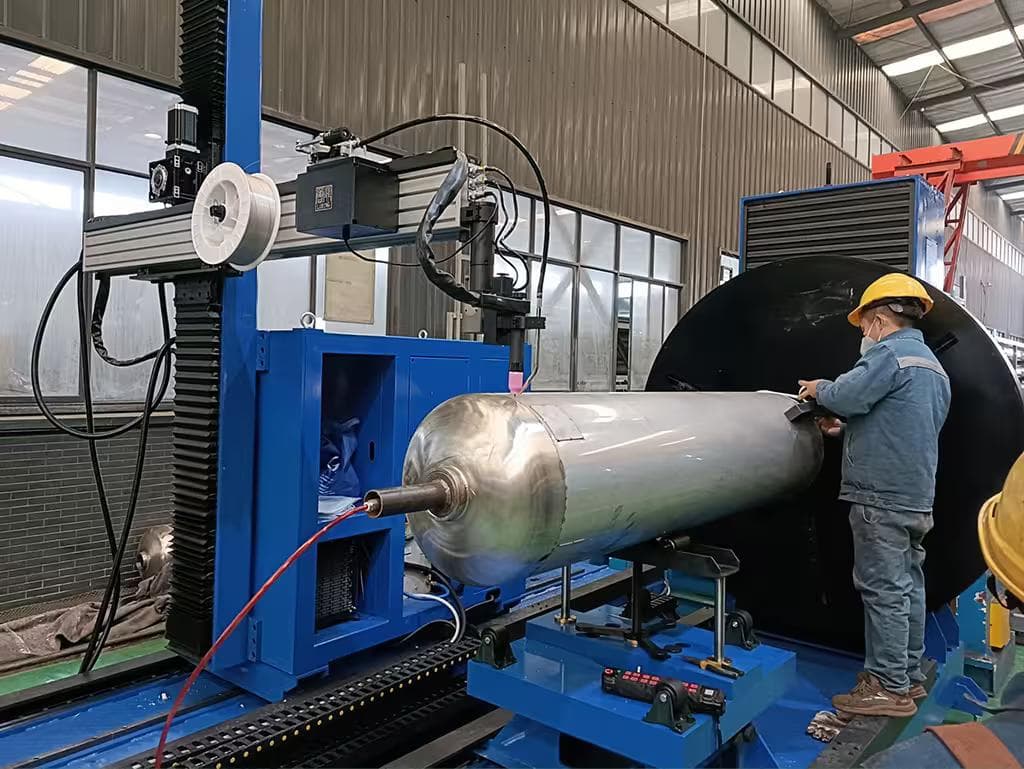
In 2025, automation isn't replacing welders; it's rescuing an industry facing severe labor shortages. By taking over repetitive, high-volume tasks, automatic welding systems allow skilled human operators to focus on complex, high-value projects. The future of welding relies on human-machine collaboration, driving better efficiency, safety, and productivity.
The State of Industrial Welding
As industrial manufacturing enters 2025, a recurring question dominates factory floors and engineering boardrooms: Will automation completely replace manual welders? With rapid advancements in intelligent welding equipment and robotics, it is easy to assume that the traditional welder is being phased out. However, for industries with stringent quality requirements, such as aerospace, oil and gas, biopharmaceuticals, and pressure vessels, the reality is much more nuanced. Automation is not here to replace the workforce, it is here to upgrade it.
At Jin Luding Welding, with nearly 20 years of experience in high-precision automatic welding solutions, we see automation as a collaborative tool that bridges the gap between surging production demands and an evolving labor market.
The Driving Force: The Global Welder Shortage
The push toward automation is largely driven by necessity rather than a desire to eliminate jobs. Globally, the manufacturing sector is facing a severe shortage of skilled welders.
- An Aging Workforce: A significant percentage of highly experienced welders are reaching retirement age, taking decades of hands-on metallurgical knowledge with them.
- Lack of New Entrants: Fewer younger workers are entering manual trades, leading to a massive talent deficit.
- Rising Global Demand: Industries like hydrogen energy, shipbuilding, and lithium battery manufacturing are scaling up rapidly, requiring more welding throughput than the current workforce can supply.
Instead of replacing workers, intelligent welding automation steps in to absorb the sheer volume of work, allowing factories to maintain production schedules without compromising quality.
Where Automatic Welding Systems Excel
Automation thrives on predictability, repetition, and precision. Rather than adapting to every unpredictable variable on a factory floor, automatic welding equipment is designed to execute specific, high-volume tasks with zero fatigue and perfect consistency.
Key applications where automation drastically outperforms manual labor include:
- Orbital Pipe Welding: In biopharmaceuticals and oil & gas, orbital welding systems provide 360-degree, flawless, and repeatable welds on complex pipe layouts, eliminating the risk of human error in tight spaces.
- Tank and Pressure Vessel Welding: Automated tank welding solutions ensure continuous, defect-free seams over long distances, which is virtually impossible for a human to do without stopping and risking weld integrity.
- Corrugated Metal Hose Welding: High-speed automatic TIG welding machines can process thin-walled and highly specific components with micro-level precision, drastically reducing defect rates.
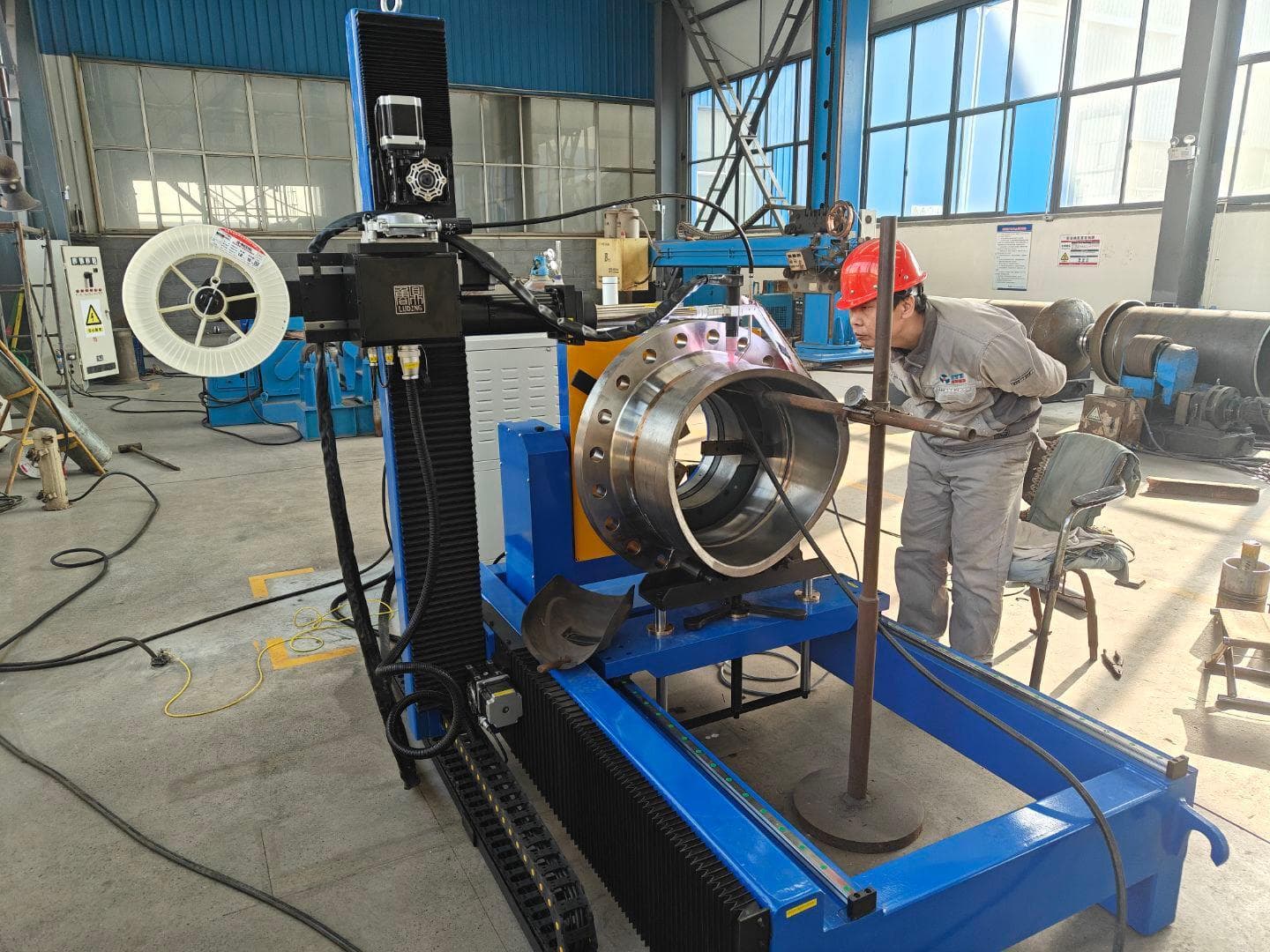
By delegating these repetitive, high-stakes tasks to machines, manufacturers achieve a higher ROI, reduce material waste, and guarantee industrial-grade reliability.
The Evolving Role: From Manual Welder to System Operator
The introduction of automatic welding machines shifts the daily reality of the welder. The job is no longer just about manual dexterity and torch manipulation; it is transitioning into a highly technical role of system programming, parameter optimization, and quality control.
Today’s welding professionals are becoming Welding Operators and Technicians. Their responsibilities now include:
- Setting up and calibrating intelligent welding automation equipment.
- Programming complex weld parameters (amperage, voltage, travel speed, wire feed) into the system interface.
- Monitoring the weld pool via high-definition cameras and adjusting parameters in real-time.
- Performing metallurgical quality assurance and post-weld inspections.
This shift upskills the workforce, making the job physically less demanding, safer, and more intellectually engaging.
Why Human Expertise Remains Irreplaceable
Despite the power of automation, the human brain remains the most advanced sensor on the production floor. Automation requires standard, highly controlled environments. Humans, however, are masters of adaptability.
Human expertise is still strictly required for:
- Variable Fit-Ups: When materials do not align perfectly, a human can adjust on the fly. Machines often require perfectly pre-machined parts to function correctly.
- Complex Custom Jobs: For low-volume, highly customized, or repair-based projects, programming a machine takes longer than simply having a skilled tradesman do the work manually.
- Decision Making: A machine executes the parameters it is given. It takes a skilled human welder to look at the material thickness, joint type, and environmental conditions to determine what those parameters should be.
Conclusion: Embracing the Future with Jin Luding
Will automation replace welders? The realistic answer for 2025 and beyond is no. Automation will replace the repetitive, physically exhausting aspects of welding, but it will rely entirely on skilled human operators to guide, program, and oversee the technology. The future of industrial manufacturing lies in the synergy between human expertise and machine precision.
At Jin Luding Welding, we empower this transition. Backed by nearly two decades of R&D and patented technologies, our automated solutions are designed to make your workforce faster, safer, and infinitely more capable.
Ready to upgrade your production line with high-precision automatic welding solutions? Whether you need customized automatic TIG machines or comprehensive orbital pipe welding systems, our engineering team is ready to assist.